In short
Osaka is the city of Japanese popular cooking, and it claims the title: the local word kuidaore means roughly "to ruin yourself eating". It is a merchant city, direct, known for a humour and an accent the rest of Japan identifies immediately.
Namba and Dotonbori, to the south, form the nightlife and food heart, along the canal of illuminated signs. Umeda, to the north, is the district of stations and towers. Shinsekai keeps a post-war atmosphere around the Tsutenkaku tower.
Arriving and getting around
Kansai airport is built on an artificial island in the bay, linked by train and bridge. It is the air gateway to the whole of western Japan.
The metro is dense and simple. The ICOCA contactless card also works on most other Japanese networks and in convenience stores.
Osaka is the best base in the region: Kyoto is about fifteen minutes away by fast train, Nara forty, Kobe half an hour — often for less than sleeping in Kyoto.
What it really costs
Accommodation is markedly cheaper than in Kyoto or Tokyo, for comparable quality.
Eating in Osaka costs little if you stick to the street specialities: takoyaki, okonomiyaki, kushikatsu. The Kuromon market is the food market of reference.
When to come
March–May and October–November. Summer is hot and heavy, winter cool but dry and workable.
The periods to avoid for transport are Golden Week in early May, Obon in mid-August and New Year: the entire country is on the move.
What nobody tells you
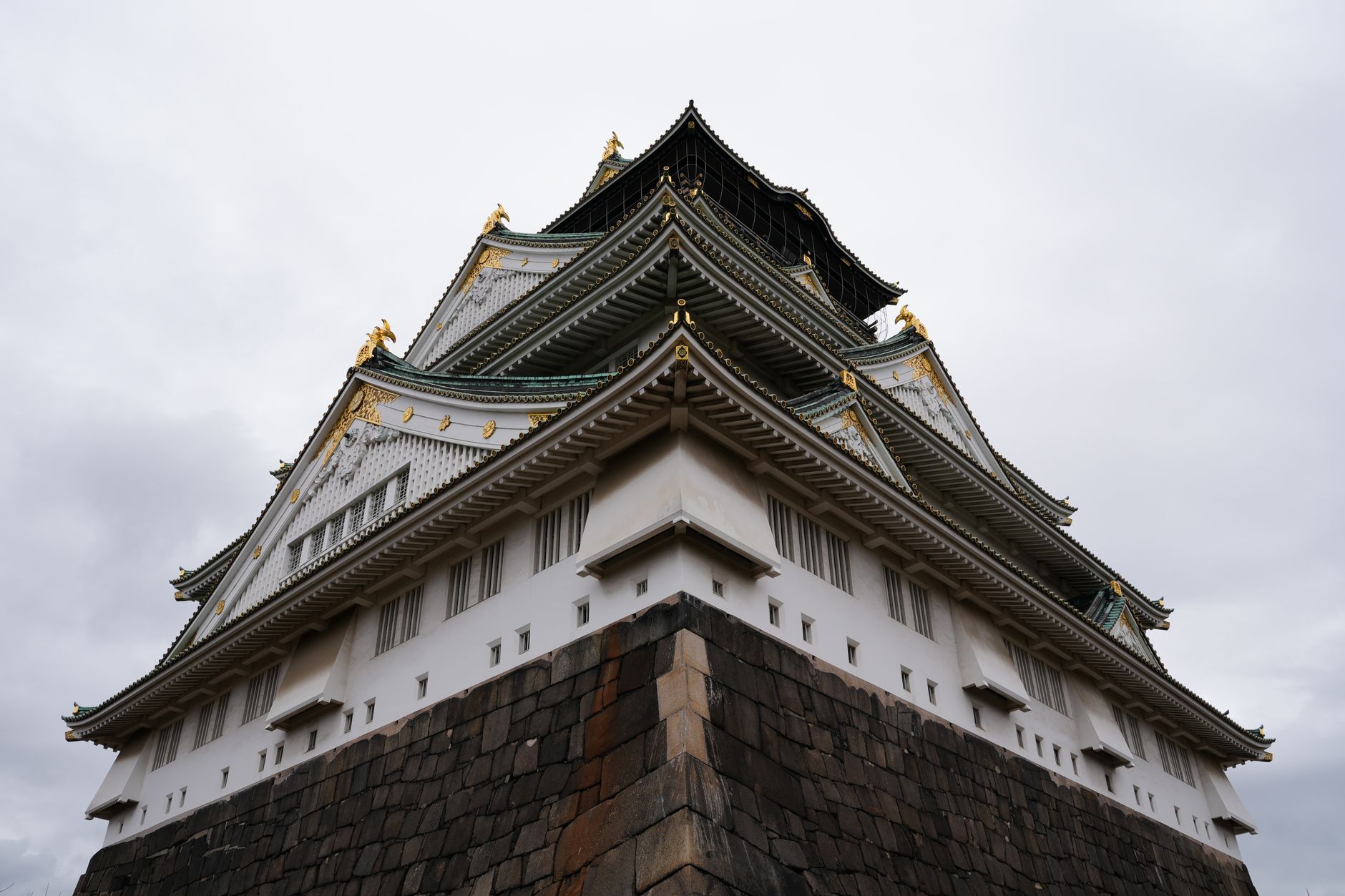
Osaka Castle is not an old building. The present tower is a 1931 concrete reconstruction, since restored, fitted with a lift and a museum. The park and the moats, on the other hand, are spectacular and original.
In Osaka, you stand on the right on escalators — the opposite of Tokyo. It is the detail that immediately marks out a visitor.
The kushikatsu of Shinsekai is eaten with a shared sauce: double-dipping a skewer you have bitten is forbidden and signs say so everywhere.