In short
Oaxaca is the capital of a state where more than fifteen indigenous languages are spoken — Zapotec and Mixtec foremost. That is not a historical detail: it is the demographic reality behind the region's food, textiles and festivals.
The historic centre, World Heritage listed, clusters around the Zócalo and Santo Domingo. Jalatlaco and Xochimilco are the older cobbled quarters, quieter. The 20 de Noviembre and Benito Juárez markets adjoin the centre.
Arriving and getting around
The airport takes domestic flights and a few international links. The motorway from Mexico City takes about six hours by coach.
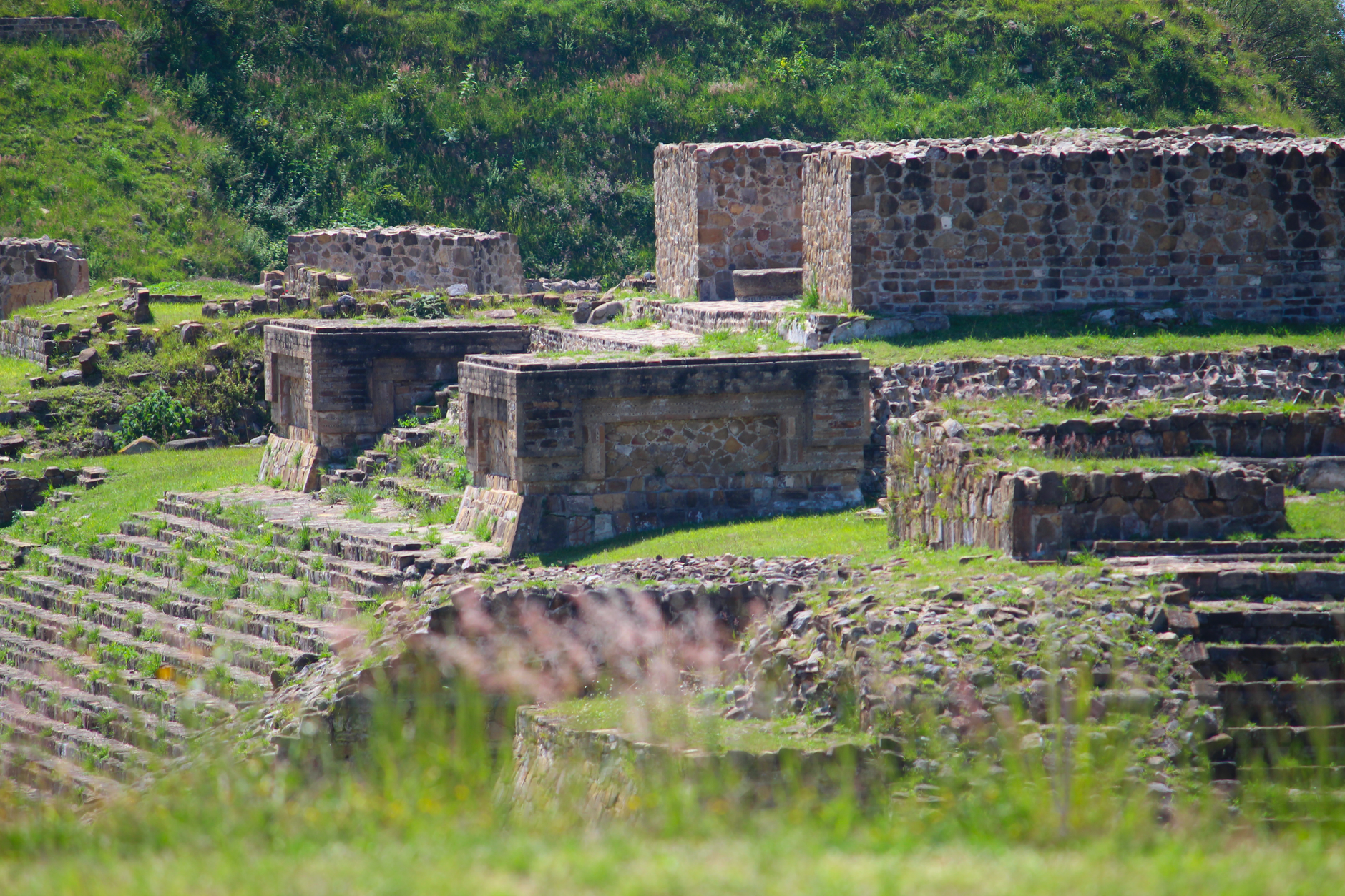
The centre is covered entirely on foot. Monte Albán, the Zapotec city on its levelled mountain, is some twenty minutes away; Hierve el Agua, the petrified waterfalls, about two hours.
Colectivos and buses link the valley villages: Teotitlán del Valle for rugs, San Bartolo Coyotepec for black pottery.
What it really costs
Oaxaca is cheap, and craft goods are sold closest to the maker in the villages rather than in town.
Mezcal is a local product protected by appellation; the valley palenques can be visited.
When to come
October–April is the dry season.
The Day of the Dead, late October to early November, is one of the most important in Mexico here: accommodation books months ahead. La Guelaguetza, in July, brings together delegations from the state's eight regions for two Mondays of dance.
What nobody tells you
Mole is not a sauce but a family: Oaxaca claims seven, including the black, the red and the green, which share neither base nor use. Black mole contains chocolate but is not sweet.
The Tlacolula market, on Sunday, is an indigenous market trading since pre-Hispanic times, an hour from the city. It is the liveliest in the valley and it is not made for visitors.
Grilled grasshoppers, chapulines, are sold in the market and are an ordinary food, not a dare.
The state of Oaxaca sees road blockades during social movements, which can interrupt links without notice.