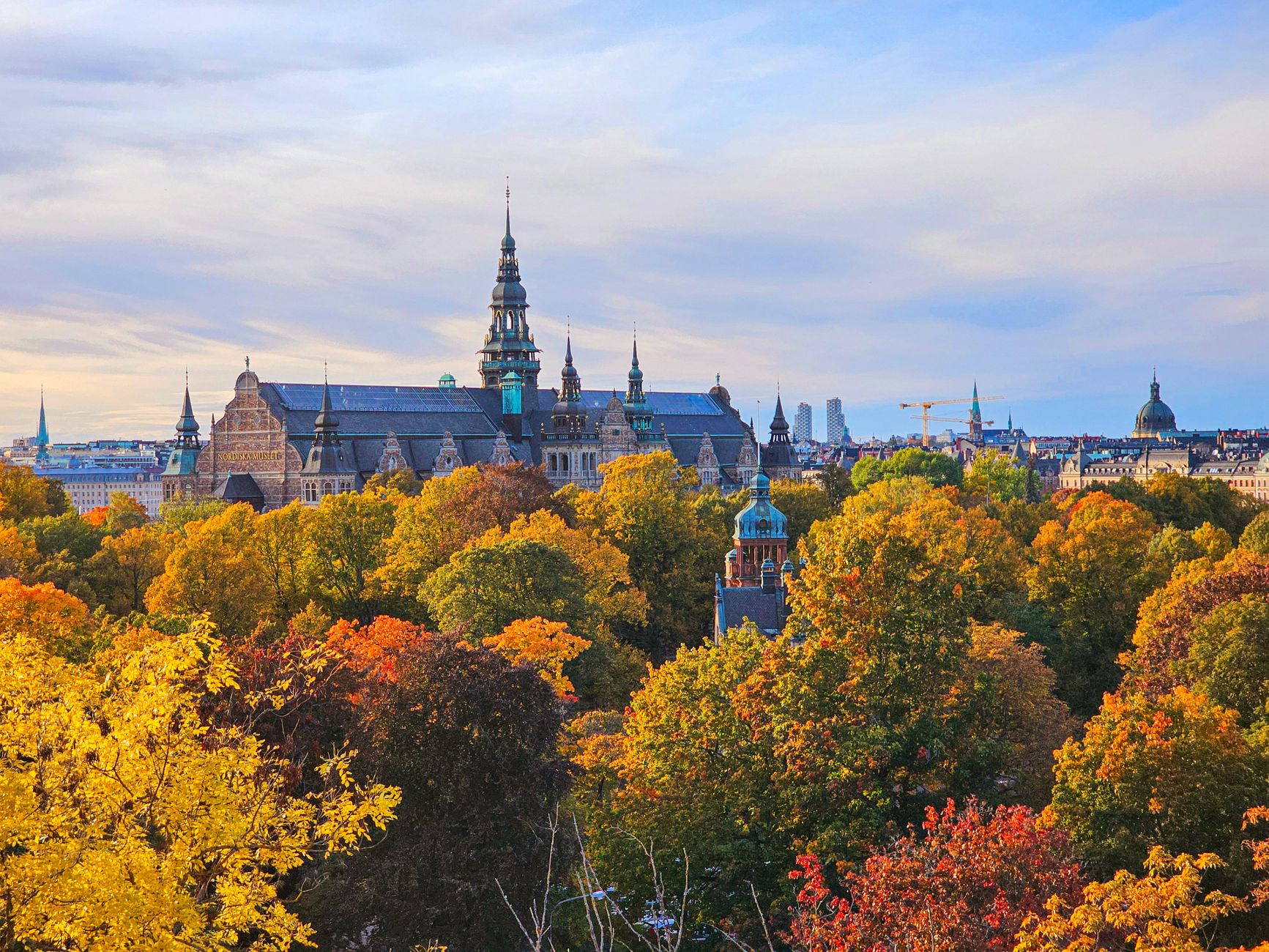
In short
Stockholm is built on fourteen islands linked by some fifty bridges, and the archipelago beyond it holds close to thirty thousand more. The ferry here is city transport, not an excursion.
The right of public access — allemansrätten — allows you to walk, camp for a night and pick berries and mushrooms on private land, provided you damage nothing.
What it really costs
Housing is the crushing item, and the regulated rental market has waiting lists measured in years: a stay is arranged through a sublet, which costs more.
Eating out is expensive in the evening and far less at midday: the dagens lunch, a fixed-price set menu, is an institution and halves the bill.
What nobody tells you
Sweden is the closest thing in the world to a cashless country. Many shops, museums and even churches refuse notes. Arriving with krona in your pocket serves no purpose.
Light governs the year. In June it barely gets dark; in December the day lasts six hours. Prices and mood follow that curve.
The ferry to Djurgården is included in the city transport ticket: the crossing that looks like a paid excursion is covered by the pass.