In short
Yerevan is one of the oldest continuously inhabited cities in the world: its foundation is dated to 782 BCE, making it older than Rome.
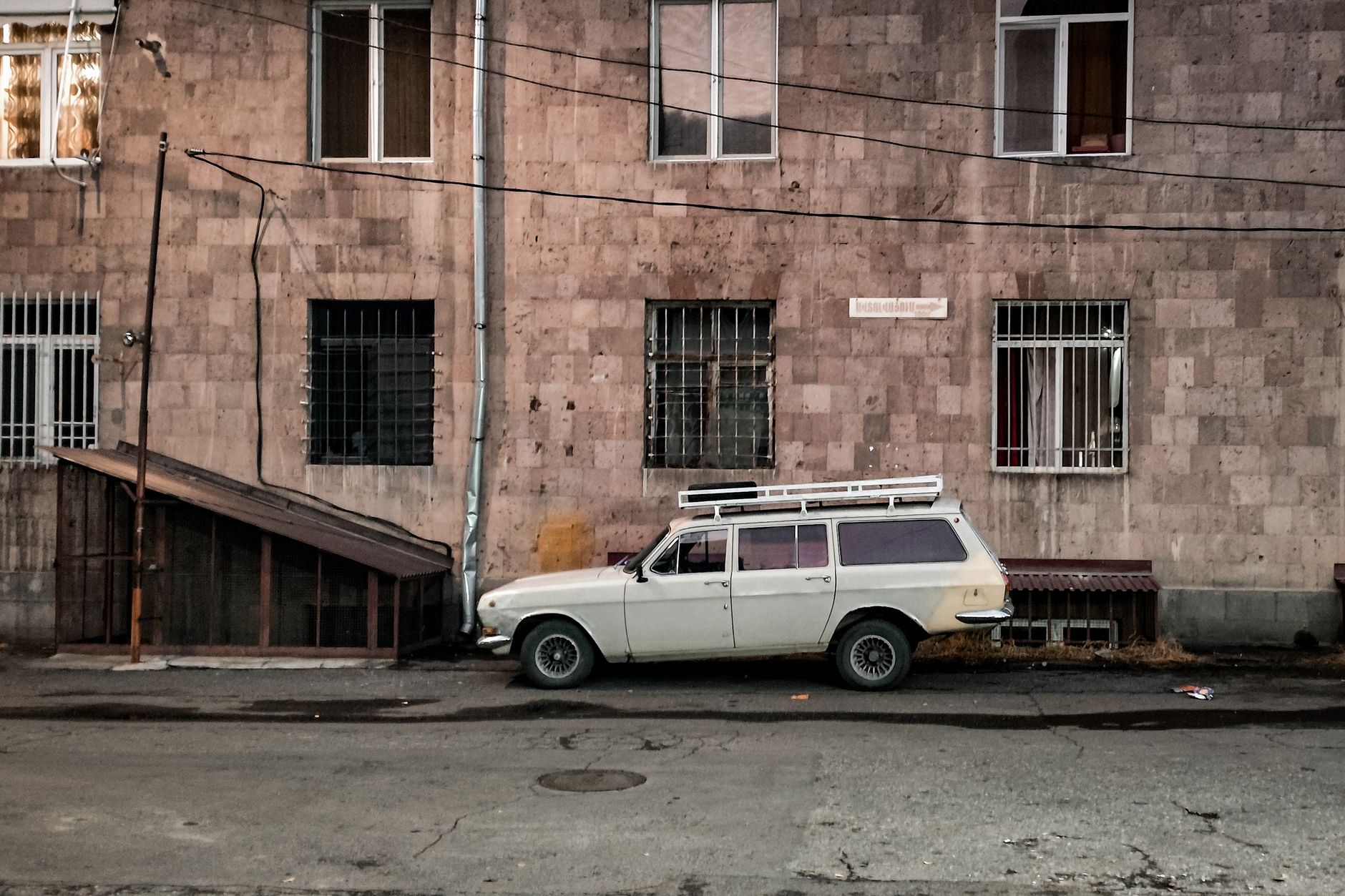
Its present appearance, however, dates from the 1920s and 1930s: the architect Alexander Tamanian redesigned it on a radial plan, imposing tuff, the local volcanic stone, whose pink and ochre tones earned Yerevan the nickname "the pink city".
Republic Square is the centre. The Cascade, a monumental stairway to the north, climbs to a belvedere and holds an open-air contemporary art museum.
Arriving and getting around
Zvartnots airport is some ten kilometres from the centre.
The metro has one line; the marshrutkas, minibuses, complete it. The centre is walked.
Excursions to Garni and Geghard — a Hellenistic temple and a monastery cut into the rock, World Heritage listed — work as half-day trips.
What it really costs
Yerevan is cheap, food and accommodation included, which has made it a popular long-stay base.
The currency is the dram.
When to come
May–June and September–October. Summer is very hot and dry, winter cold and snowy.
What nobody tells you
Mount Ararat fills the city's whole horizon, and it is in Turkey. The mountain is the Armenian national symbol — it appears on the coat of arms — but it lies on the other side of a border closed since 1993. Grasping that explains a great deal about the country. It is visible only in clear weather, chiefly in the morning.
The Matenadaran holds one of the world's most important collections of ancient manuscripts, in Armenian and in many other languages. The Armenian alphabet, created around 405, is related to no other.
Tsitsernakaberd, the memorial to the Armenian genocide of 1915, overlooks the city. It is free and the accompanying museum is the most important visit in Yerevan.
Areni, in the south of the country, yielded what is considered the oldest known winemaking facility, dated to about six thousand years ago. Armenian viticulture is undergoing a recent revival, and Yerevan's wine bars live off it.