In short
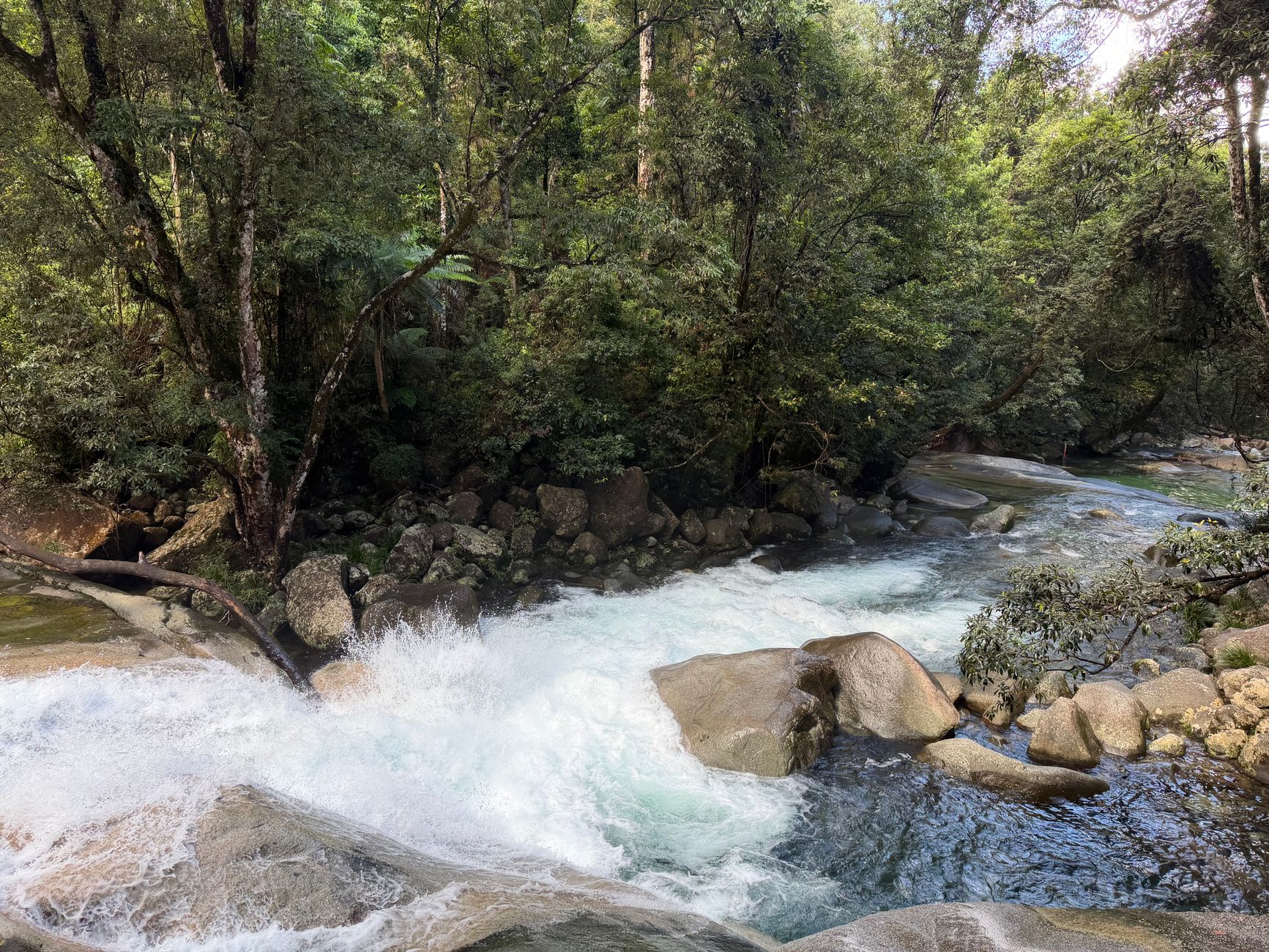
Cairns is the gateway to two adjoining World Heritage sites: the Great Barrier Reef offshore, and the Daintree rainforest, the oldest rainforest on earth, to the north.
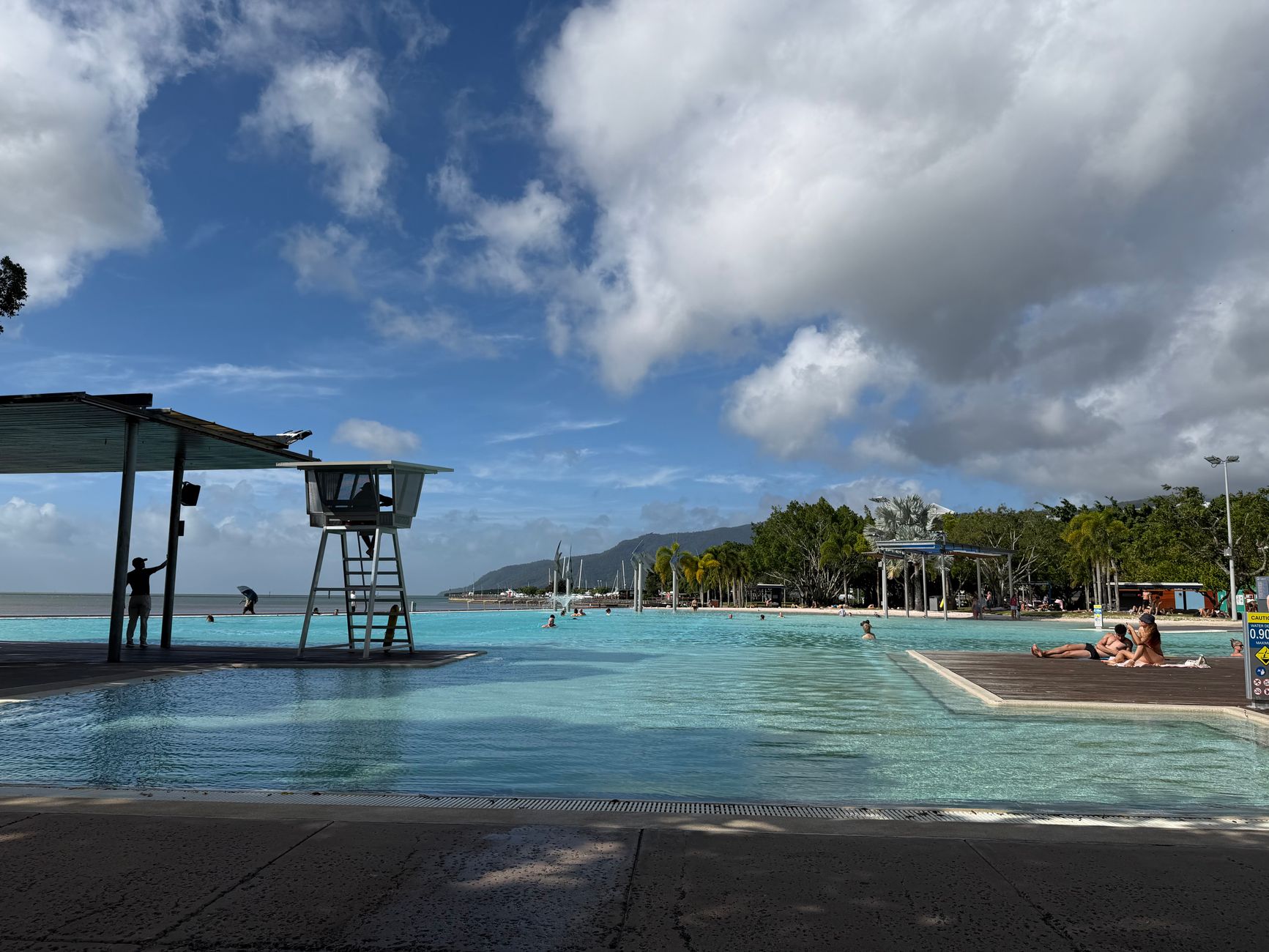
The town itself is small and functional. It has no swimmable beach: the Esplanade faces mudflats, and swimming is done in the artificial lagoon on the waterfront. The beaches are north — Palm Cove, Trinity Beach — twenty minutes away.
Port Douglas, an hour north, is the alternative base, quieter and closer to Daintree.
Arriving and getting around
The airport is ten minutes from the centre, with no direct public transport: shuttle or taxi.
Reef trips leave from the Reef Fleet Terminal in the town centre, between seven and eight in the morning. The Kuranda scenic railway and the Skyrail cableway combine into a day loop.
For Daintree and Cape Tribulation, a car is the realistic mode, with a tolled cable ferry across the Daintree River.
What it really costs
The dominant item is the reef trip, whose price varies enormously by boat and by distance. The marine park environmental charge is added and is not always included in the advertised fare: ask before booking.
Staying in Cairns costs less than in Port Douglas.
When to come
May to October: dry season, calm seas, maximum visibility on the reef.
From November to May it is stinger season — irukandji and box jellyfish — and swimming in the sea is done in a full body suit, including inside the protective nets. It is also the wet season and cyclone season.
What nobody tells you
Saltwater crocodiles are present in the estuaries and on the northern beaches. The warning signs are to be taken seriously: there are fatal attacks, and the rule is never to enter water not marked as safe.
Coral bleaching has hit the reef several times. Trips to the outer reefs — further out, more expensive — show a markedly better state of conservation than the inner ones.
Seasickness on the two-hour crossings is common. Operators hand out tablets, but they work better taken before boarding.