

In short
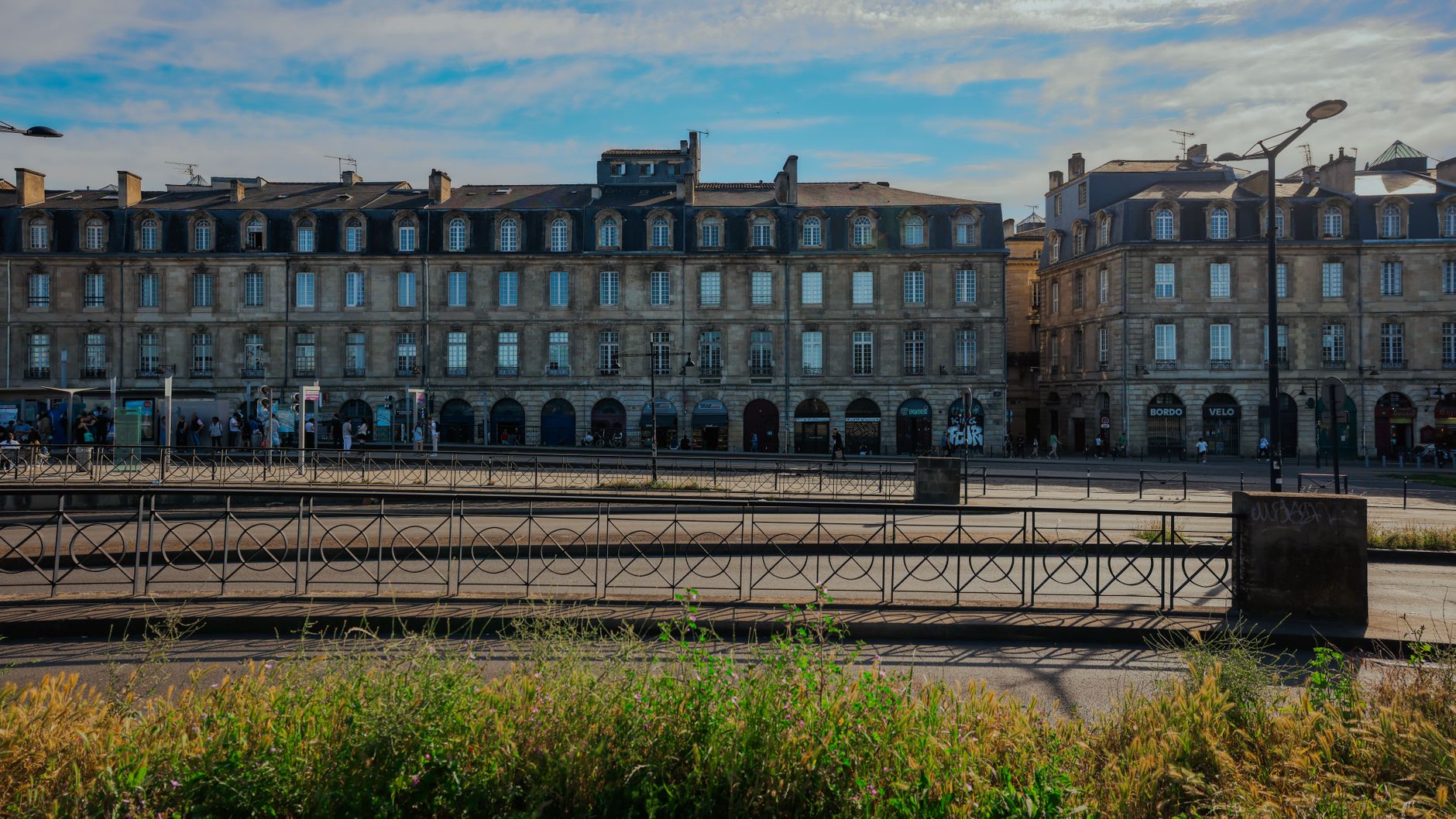
Bordeaux sits on a crescent of the Garonne, hence its nickname, the port of the Moon. The eighteenth-century centre is World Heritage listed across more than eighteen hundred hectares — the largest listed urban ensemble in France.
Saint-Pierre and the Triangle d'Or form the classical heart. Les Chartrons, the old wine merchants' quarter, has become the district of antique dealers and brunch. Saint-Michel is working-class and multicultural. Darwin, on the right bank, is a converted military site.
The vineyards begin twenty minutes away: Saint-Émilion at forty, the Médoc at an hour.
Arriving and getting around
The high-speed line puts Paris about two hours away. Saint-Jean station is south of the centre, linked by tram C.
The tram has linked Mérignac airport to the centre since 2023, more slowly than the shuttle but at the ordinary city fare.
The TBM network covers trams, buses, river shuttles and bikes. The Batcub boats on the Garonne are public transport at the normal fare.
What it really costs
Bordeaux has become much dearer since the high-speed line arrived, to the point of ranking among France's most strained housing markets after Paris.
Tastings at the châteaux of the Médoc and Saint-Émilion are often charged for and must be booked. La Cité du Vin offers a ticket including a glass at the belvedere.
When to come
May–June and September–October: the harvest is in September, and that is the most interesting time in the vineyards.
Summer is hot and the city empties in August. Winter is mild and damp.
What nobody tells you
The miroir d'eau, facing the Place de la Bourse, runs in cycles of mist and reflection, with maintenance breaks and a winter shutdown. It is not a permanent pool.
Saint-Émilion fills with coaches from mid-morning. Arriving before ten or after four changes the village entirely.
The left-bank quays can be walked or cycled for several kilometres, traffic-free: the best route in the city.